This page set is related to what I would term "serious" music. The term "Classical" in its true sense is too narrow a view. There is no order again here.

|
This page set is related to what I would term "serious" music. The term "Classical" in its true sense is too narrow a view. There is no order again here. |
|
|
|
Where to begin? Here I include the first works I heard by a few composers. The order of appearance is of no great significance.
|
|
|
|
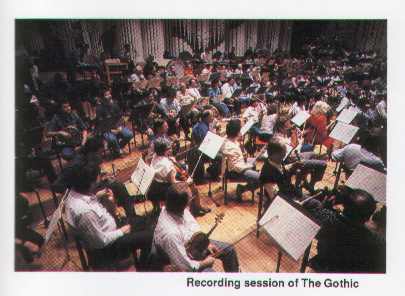
Havergal Brian.(1876-1972) English composer. He wrote perhaps the biggest symphony the Gothic in 1919-1927.He wrote 31 others, all smaller in scale, but very distinctive.There are also other works, including operas. His style is both very distinctive and accessible.Sadly live performances are quite rare. |
I heard (and taped off air) The first performance at the Royal Albert hall. It was a shattering experience! The Marco Polo (Naxos) CDs are not quite the same, but will suffice. The scale of the work can be judged by the session photo adjacent to this note. The first movement alone is an experience! The second part is a setting of the Te Deum. Very powerful in places.
|
|
||
|
Jean Sibelius
|
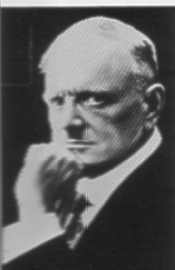
I can remember playing the first LP I got of the 5th. Symphony. It includes the Karelia Suite opus 11 as a fillup. I refused to play that until I had played the symphony! That recording is by the LSO and Alexander Gibson RCA 1960.I have several records of most of his music. Sir John Barbirolli was a leading conductor of Sibelius' music. CD set just reissued this summer. The BIS label aims to record all Sibelius' works. |
What is a good starter? Perhaps the set of shorter works by Barbirolli. Finlandia etc. The second and fifth symphonies and the violin concerto. Also En Saga, the Karelia Overture, and Pelleas and Melisande. If you are really adventurous, try the epic Kullervo. The solo piano music is also worth looking up, as is Voces Intimae, the string quartet. The piano work The Harpist I think is excellent. |
||
|
Franz Liszt
|
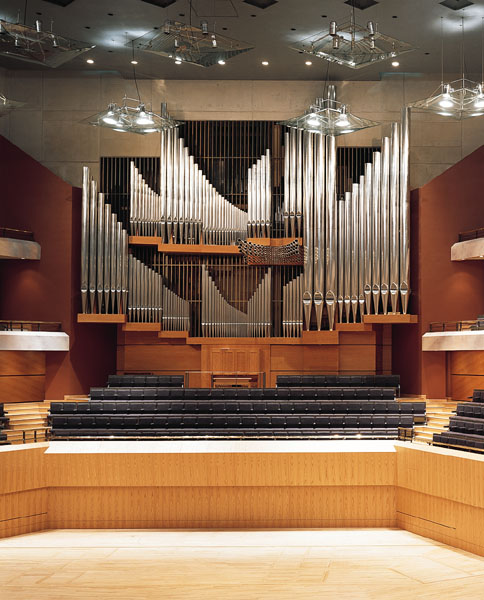
The organ music. Ad Nos Ad Salutarem Undam. The Faust and Dante symphonies. The tone poem Hunnenslacht, also Les Preludes. The Bridgewater Hall organ, seen left will really do justice to the solo organ works. Liszt also wrote a great deal for solo piano, and concertos. It is not easy to play, but is brilliant to listen to! He was a major keyboard virtuoso and wrote with his own abilities in mind! |
A composer of powerful and colourful music, often using the giant sound of the pipe organ as well as full orchestra. The piano works include Annees de Pelerinage, a major three part (year) set. |
||
|
Franz Schubert (1797 - 1828) |
The "Great" C Major symphony is one of my all time favourite works. The "Trout" Quintet, D.667 and Trio D.897 often get a playing too. |
|||
|
Robert Schumann |
The Furtwangler performance of Symphony no:- 4 is electrifying.The Rhenish is another of my favourites. |
|||
|
Felix Mendelssohn |
Well known for works like the "Hebrides" overture, and "Calm Sea and Prosperous Voyage". He also wrote a number of Named Symphonies, "Scottish" and "Italian" as well as other works. The Violin Concerto was the first I came across many years ago in a programme in memorial to Gilbert Harding! |
|||
|
Anton Bruckner
|
Bruckner wrote 9 numbered symphonies, but there are several others too, very early "student" works. Many people think he would have written more works had he not been encouraged to revise so many works. |
Stanislaw Skrowaczewski has a reputation as a sound Brucknerian. |
||
|
Gustav Mahler |
Arguably the antithesis of Sibelius. His music encompasses all of nature, as seen in the massive Third Symphony. The 5th of his symphonies has an adagietto, used by Ken Russell in the film "Death In Venice" |
Barbirolli, and Horenstein are worth looking up in this context. |
||
|
Samuel Barber |
Well known for the Adagio for Strings, but he has other very worthwhile works. The Toccata Festiva op36 is a formidable work for organ and orchestra. It has a fearsome cadenza for pedals alone! |
Beware the William Orbit "version" of the Adagio. Barber wrote for STRINGS in that work. |
||
|
American composer. |
A very distinctive approach here. Ives early work is fairly standard, but by the 4th Symphony, wow! That is something else! He mixes several tunes at once, needing TWO conductors! "The Unanswered Question" is a very interesting short work. |
|||
|
Wolfgang Amadeus Mozart |
He was a child prodigy and produced a wide range of music in his short life. |
Divertimento K136 is one work I really like outside his symphonic output. |
||
|
Ludwig Van Beethoven |
Everyone knows the 5th Symphony, but he wrote a very wide range indeed. Much of it was composed after he lost his hearing! |
I can't play myself, but find much of the solo piano music very impressive. |
||
|
Carl Nielsen |
A Scandinavian symphonist like Sibelius, and also wrote, amongst other things a work for organ Commotio, which is quite remarkable! The six symphonies are all well worth hearing. Try number 4 with its battling antiphonal tympani in the finale. |
|||
|
A major Russian symphonist. He also has a large output of shorter works including film music."The Gadfly" is often played on Classic FM. He fell foul of the Communist regime for many years, see "Testament" by Solomon Volkov. |
Try the 5th Symphony, perhaps the Halle version with Skrowaczewski on the podium. |
|||
|
Leos Janacek |
Glagolitic Mass, with spectacular opening and closing sections! Taras Bulba, a shorter work or Sinfonietta (with augmented brass section) |
|||
|
Bohuslav Martinu |
Six very interesting symphonies. He also wrote a "Lidice Memorial Ode" about the Nazi massacre at the village of Lidice. |
|||
|
Bedrich Smetana |
The tone poem cycle "Ma Vlast" is a very approachable set indeed. |
|
This Page PKM July 2000 (Revised August 2nd. 2009) |