156
Concrete and Steel



This page has been set up to describe the differences between steel framed and concrete tower blocks.
|
156 |
Concrete and Steel |
||||||||||
|
|
This page has been set up to describe the differences between steel framed and concrete tower blocks.
|
||||||||||
|
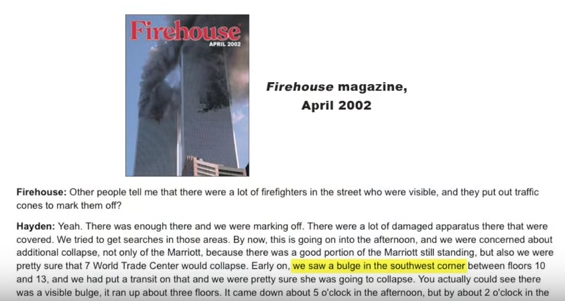
This refers to an observed earlier sign of structural failure in building 7 which led to the withdrawal of the fire fighting teams. A damaged water main had cut the sprinkler system in the building. The cover image is obviously not building 7. |
|
|
|
|
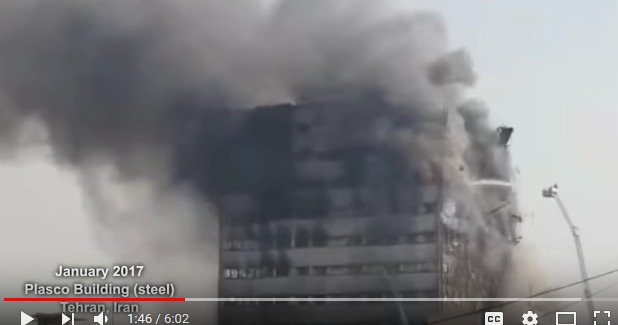
The wall to the right is failing - just below the water jet. |
|
|
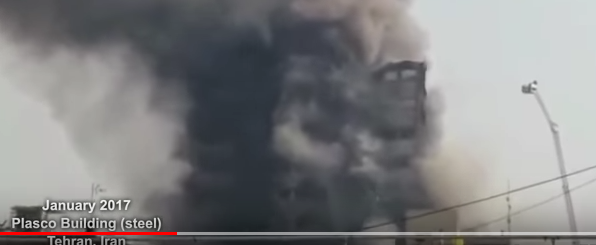
The collapse worsens - away from the camera viewpoint, not a vertical descent. |
|
|
Note, the far wall has failed - the building is falling back away from the camera. It is not a fall into footprint. |
|
|
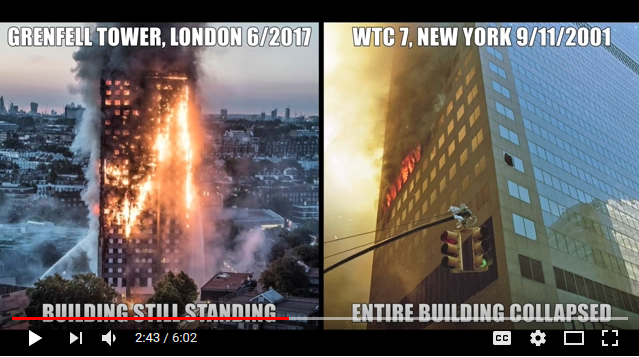
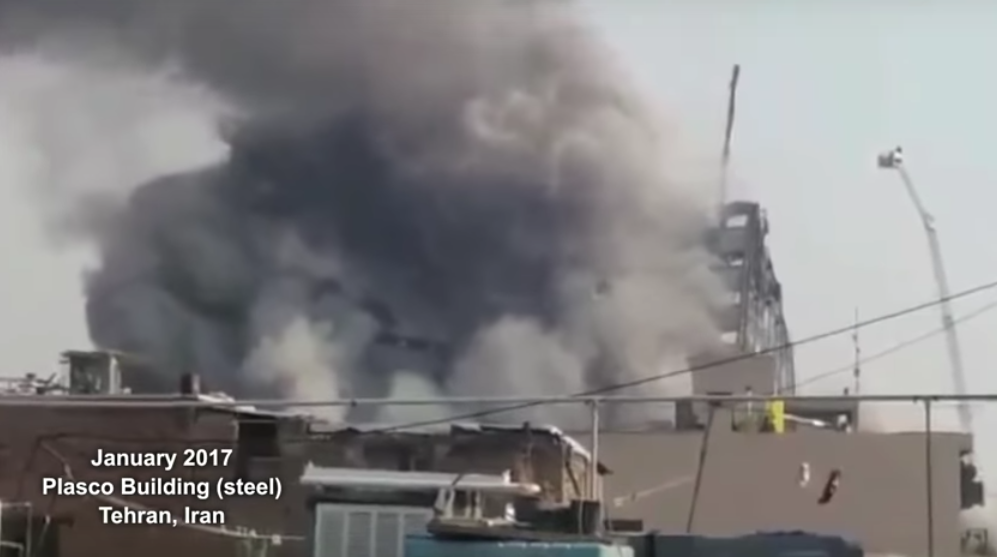
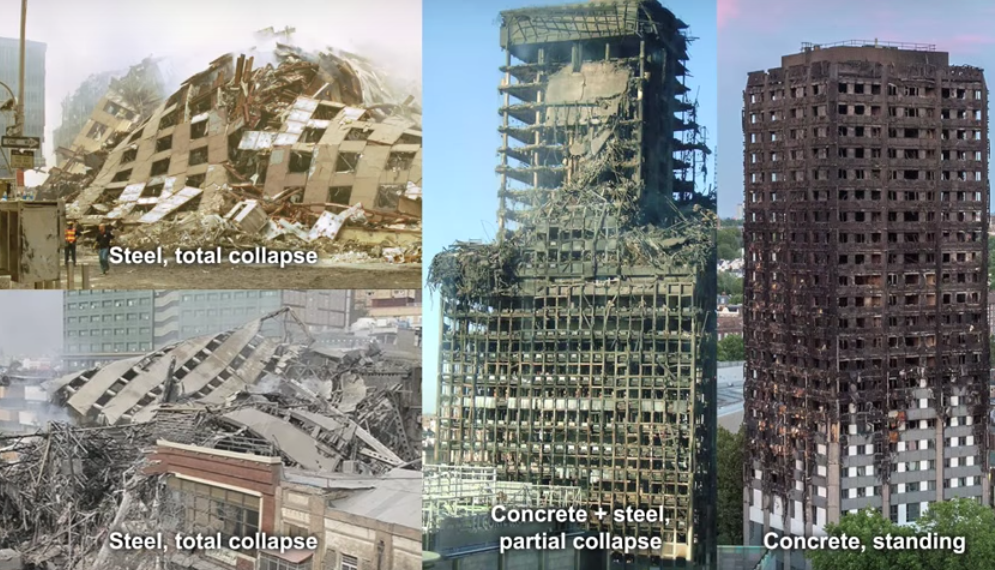
Top left Plasco. Bottom left WTC 7. Note the twisted sheets of the external walls in both cases. Middle - Windsor Tower. Right Grenfell Tower |
|
|
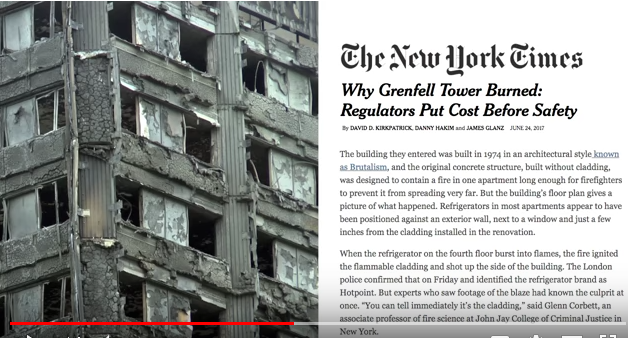
Note the relatively massive scale of the vertical columns at Grenfell. This is the reason why there was no major collapse of the overall structure. The "rebar" element was protected by the concrete. There is no such thick protection in steel frame buildings. Messrs Sponheim and Avery ignore these basic facts. There was no explosive present in the WTC collapses. As regards Grenfell, the fire crews appear to have approached the fire as if the building was unmodified and put the initial fire out. They were unaware it had escaped via the window to the cladding until too late. |
|
|
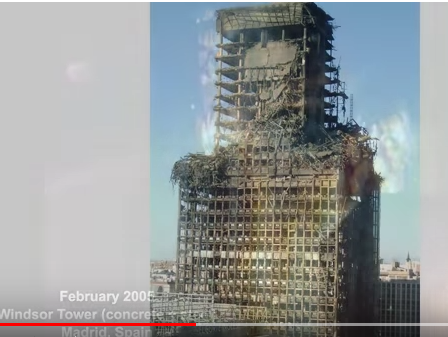
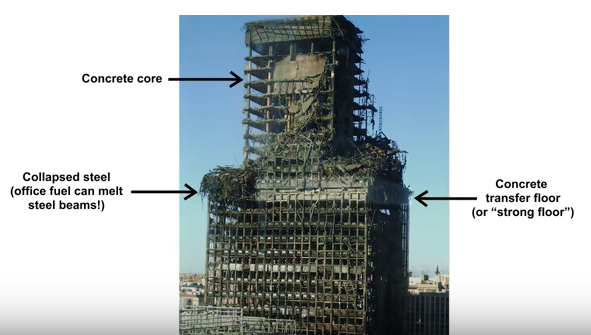
This is the Windsor tower in Madrid, Spain. Part of its upper structure was steel framed. |
|
|
The structure was divided into two halves by a mechanical floor without windows. It was a very solid building, with a central core of reinforced concrete that resisted the high temperatures of the fire without collapsing. The building did not have a fire sprinkler system. Sprinklers were being retrofitted, but they were not yet operable when the building was destroyed by fire. |
|
|
Page created 26th. October. 2017 Last edit 27th. October |